
News and stories for and about Heathen folk, traditions, and communities.
Showing posts with label Frigga. Show all posts
Showing posts with label Frigga. Show all posts
Tuesday, January 13, 2015
Urglaawe: Food for Groundhog Day
"Groundhog Day is actually the first day of an observance that we know by a few names: Entschtanning, Uffdredde, or Uffdredding (all of which mean "emergence") in Urglaawe parlance. ... In this post, we will cover the more common food traditions. The full article by Robert L. Schreiwer, which includes a recipe for Seimaage (stuffed hog's maw), may be found at the Urglaawe blog.

Monday, February 6, 2012
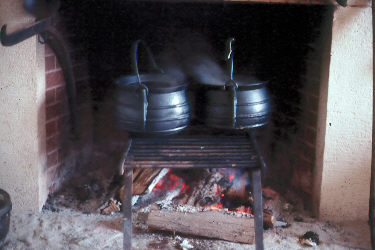
Hearth Cooking: An Ancient Cooking Technique Revisited
 |
| National Park Service |
"Hearth cooking is an ancient and wonderful craft. It is the craft that stands at the center of European cuisine. With few exceptions, all recipes that originated in Europe were first created on an open hearth and only adapted comparatively recently to the modern kitchen."
Read more at Mother Earth News.
Tuesday, December 13, 2011
Riding With Holda
Thanks to Jim in Oklahoma for finding this.
"Like someone else we know, this yuletide goddess also flew through the air, slipped down chimneys, and delivered gifts." This essay by Selena Fox on Holda and Her close variants, - Hulda, Holle, Perchta, Frigga, - may be read in its entirety at Belief.net.
"Like someone else we know, this yuletide goddess also flew through the air, slipped down chimneys, and delivered gifts." This essay by Selena Fox on Holda and Her close variants, - Hulda, Holle, Perchta, Frigga, - may be read in its entirety at Belief.net.
Monday, September 12, 2011
Wikipedia entry for the day: Sága and Sökkvabekkr
 |
| Sága records while Odin dictates in an illustration (1919) by Robert Engels. Image courtesy Wikimedia Commons. |
Subscribe to:
Posts (Atom)